Showing posts with label hormones. Show all posts

Sunday, July 22, 2012

Foraging Bite


Today's work! The dry mix foraging bundles for the week. Brown thick paper for the big birds, brown tissue paper for the tiels, and white paper for the quakers. They are all filled withe appropriate amount and mix of my dry stuff- grain mix, big birds dry mix, seeds, nuts, etc. Just put one somewhere in the cage, and it is not only an "instant" meal but great foraging.

As you can see, I start with a rectangular piece of paper, (although this one was a bit too fat and not quite long enough to be optimum).....


then fold in the two long sides, before twisting the ends tightly around......


and wrapping them to one side and loosely knotting.


Done!


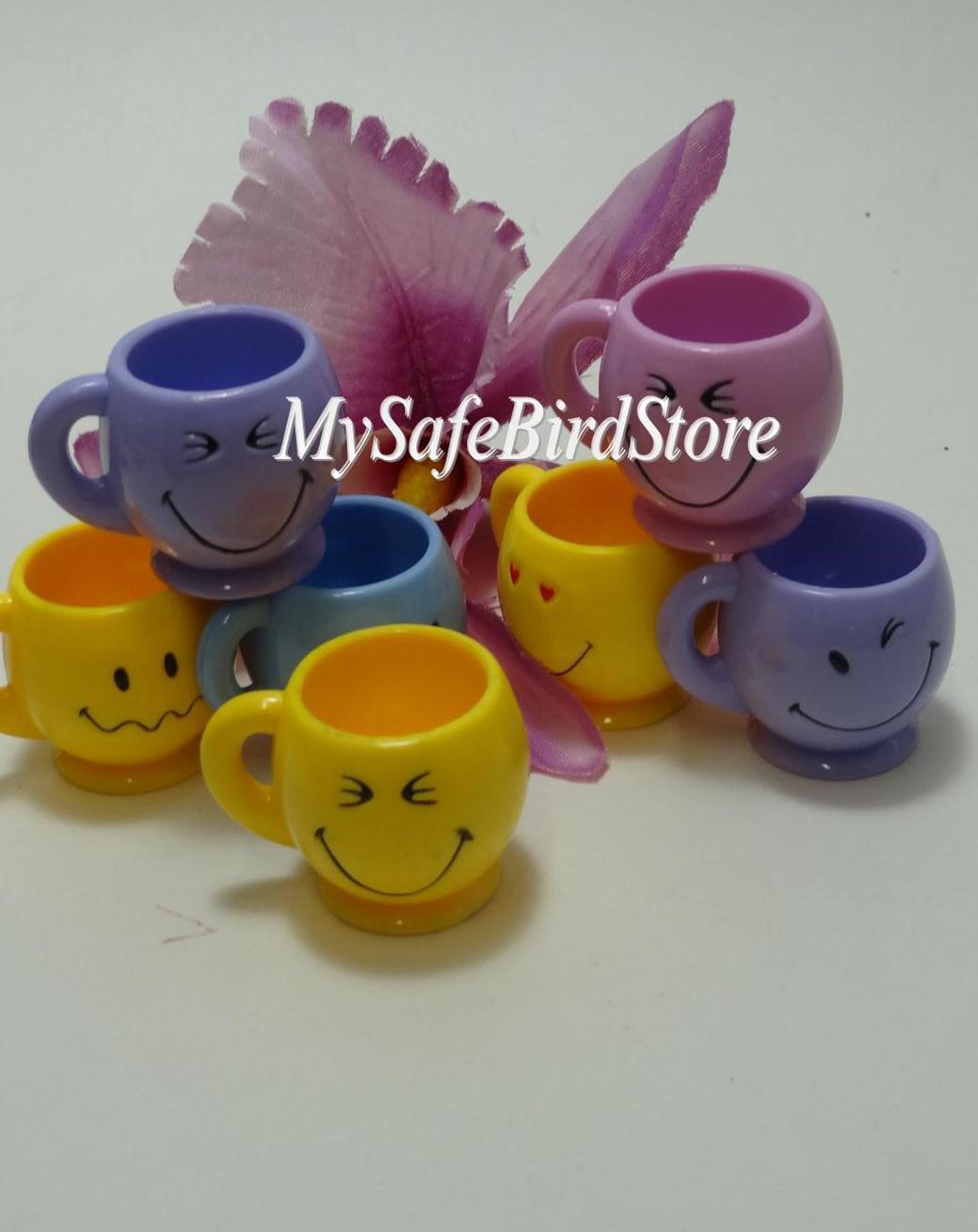
Foraging with fresh food is a bit harder, but it does not need to be. For example, why not get several of these mugs from My Safe Bird Store.


(Go HERE for the mugs)

or for large parrots/those not safe with plastic, these mini stainless steel pails from The Bird Safe Store.
(Go HERE for pails)

Distribute your fresh food, be it mash or whatever, among the mungs, and hang them, just alone by themselves with a hook on the handle, around the cage. Easy! Fill 3, 4, 5, however many, and just hang wherever, from the middle of the top bars, on the side bars, from a toy, top to bottom, all over. Start slow, and keep moving them to harder places to reach. Trust me, your parrots will figure it out, they do not need everything handed to them! It may take encouragement in the beginning, but it will be wonderful when they get the hang of it, just like we feel better after we take control of our own life and start doing things more for ourselves, moving around, exploring. And climbing all over for each little bit, hanging upside down, going to the cage bottom, that is all foraging, not to mention a bit of exercise. Plus, it is really not any harder than dishing the food all in to one or two dishes.

Sunday, May 27, 2012

One-line Problems? So Passe

I am sure everyone has heard about the dreaded hormones with parrots. Most of you will even have researched about the dreaded hormone issue. Many of you have likely personally experienced the dreaded hormone issue. The question is, should any "angry", "antsy", "annoying" or "not-my-sweet-little-cuddle-bunches-darling-prince-sparkles-love-of-my-life" behavior automatically be considered hormones?

Firstly, branding behavior as hormones can be just as much a problem as branding behavior, as, oh say, just a broken parrot. Why? Because once a behavior is branded (i.e, one-lined), it is often considered consciously or not to be solved, when there may actually be both a reason for the behavior and something that can be done about it.- although that will usually involve changing your own behavior, so consider yourself forewarned.

Take this as an example:
Let's say you got an adorable male amazon, perhaps even an adorable double yellow headed male amazon as a baby. You have had him for a of couple years, and little Joe is now becoming a mature parrot, about the age hormones can start to be a problem. One day he bites you, totally out of the blue, and is no longer very cooperative about getting out of his cage. He starts yelling a lot soon after, and tearing around his cage like a madman (or bird) so you know at this point that the problem is hormones, so famously a problem in the "hot three" amazon males, and you will have to give him lots of toys and wait it out, being patient with him, moderating his daylight hours, etc., right?

Well how about another look at this story:
Since you brought Joe home as an adorable little baby, he has let you do anything with him. You never really trained him to step-up, and always just reached in and stuck you hand under his feet whenever you wanted to get him out; you used the same method to move him from any area to another. Joe is a sweet guy, and seems to love doing just about anything. Occasionally he is not quite as willing as other times, but you know he loves being with you as much as you love being with him, so you get him to do whatever you want anyway- like get out of his cage when he is busy playing, because you want to take him in the shower with you.

Everything is going so well, and you so adore little Joe, that as the years go by, you do not notice the subtle signals Joe is giving you that he would rather not be [essentially] forced to mold his schedule to yours, or that he might rather finish playing before coming out, or perhaps is tired of having most or all of his choices made for him- which is something most humans dislike, as well. First he just leans back when you go to pick him up, or grips his perch more, then he tries moving away from your hand, looking away from your hand, trying everything he can to tell you politely that he is not interested, perhaps even "play attacking" your hand. You mean well, that is quite true, and Joe I am sure knows this, but he cannot seem to get through to you that he would like a two-way relationship!

Joe finally reaches the point that he is so irritated with you that he bites your hand as he sees it coming in to get him again. And this time, you respond! You take your hand out, and go away! Yay! Joe is so happy to have a communication method now, and knows that biting will work although nothing else does. So he starts biting to communicate his messages, and you needless to say are not able to get him out of the cage very often. Being in the cage more, however, is no fun, so Joe gets "cage fever" and starts screaming more, and seems so antsy inside his cage, tired of the same little box.


The Point?
This example is made up, but actually fairly common. Yes, it is full of behavior branding, but that is to get the point across- very difficult to tell a story from the parrot's hypothetical point of view without it! Not all parrots will become raging balls of hormones when they mature. But pretty much, they will all change. Joe may or may not become a raging ball of hormones at some point, but in this story, he is not so much hormonal as he is simply an adult trying to state his rights and decide on his place in the world.

From a behavior standpoint, even with what you are sure are hormones (like a female laying eggs and building nests, or a male feeding everything) you need to resist the urge to brand the behavior. Look at the behavior as you would any other, as there are often still things you can do to make life easier and more pleasant for all. Formal training of some kind will always help. It redirects their attention to something else, something rewarding, and allows you to interact with them in a safe way- you can even train parrots that are not safe to let out of the cage. Things like target training, or taking an object and dropping it in a bucket, etc, are all trainable with bars in between you and your parrot.

Most importantly, while every one needs to be aware of how hormones can affect your parrot, and therefore your life, and aware of the fact that all parrots will change in some way as they become an adult, you should not let that knowledge prevent you from finding solutions to the problem currently at hand.

Tuesday, May 15, 2012

Sunny day, chasing the clouds away...........


 Give them a bath if it is hot, even on humid days it is quite cooling.
Trust me, I am from the humid south. It is. However, if you 
see any signs of discomfort, get them inside immediately!! 

Getting outside is important for parrots- they really need the Vit. D. In fact, for some species like African Greys, getting outside regularly can be the difference between seizures and all the trouble with calcium deficiencies, and a happy, healthy parrot. Vit D plays an integral role in healthy body functioning; you need vit D. to properly absorb calcium (so not enough vit. D means not enough calcium), which affects magnesium, and phosphorous, etc. etc. Vit. D is also is an important hormone, which helps boost your mood and do all the wonderful things those happy hormones do. Further, as it naturally is not good for bacteria and other nasties, it can help external skin issues. If you do not have enough vit. D, you cannot expect a healthy, happy, stable parrot. In basic layman's terms, sunshine is even better than it feels!

Clementine, your thoughts?

Wait......... ugh....
 just a minute........
 getting .... umm......this..... feather......


You can get vit. D from pellets and other fortified foods, but there is some debate over how well the body can use those synthetic sources; personally, I think you need some form of Vit. D, but the best form, if you can get it, is naturally from the sun. As someone that does not feed pellets, I make sure to get my parrots outside year round. In the winter, this is not overly often, but since I am in the south, there are usually a few days a month when the weather is in the upper 40s/50s, sunny and not really windy so they can go out. They rest of the year I try to get them out all the time, several times a week if possible. Vit. D can be stored in the liver for 20-30 days, so there is some leeway on this.

Claudia says:

What do you think? Should I peroxide???

Yes, I do hope to have an aviary soon, but up until now, I have done this just like most folks have to: with carriers and harnesses. If your parrot is not harness trained, no worries, a carrier is fine. If your parrot will not go in a carrier, you have a huge problem, one that would need a post of its own, and you need to address that problem. What if there was an emergency, not to mention vet visits; all parrots should accept carriers with little fuss, and it is not that hard to train should you have a phobic one; Barbara Heidenrich has a lot of advice on this.

Chester says:

Ummmm..., nah, I like the red.

Lastly, a warning- NEVER take a parrot outside unless in a safe and secure carrier or in a proper harness; falconers use jesses, those are not safe with parrots!!! Even well clipped birds, can, will, and have gotten away; all it takes is one good bit of wind, and they can be surprised in to taking off, and once off, as they are unable to fly, they will be unable to come back to you.

Peek-a-boo!

I don't know why I like this picture.......
must be all the shades of green!

So make some time, get a carrier, and get out in the sun! Good for you as well, and with some good reading material and a nice drink (I like lemonade and ice tea, what 'bout you?) what could be better? Just watch for hawks!


Saturday, April 7, 2012

Just a Note

Hopefully everyone that is celebrating a holiday this weekend has a good one. I have some family coming over today, but since so many here are hormonal, I do not think they will appreciate the company. I suppose that is only fair, since the company is unlikely to enjoy the parrots, either. I will be well satisfied if there are no casualties, and everyone leaves with all digits, noses, and without the need to use an ear trumpet. The little things in life, folks, that is all you need.

Oh well. I think I will make them a special treat, some banana-pumpkin bread, and that they certainly will enjoy. After all, can you expect them to be at optimum annoyance on regular food? No, not at all, not at all.

Also, I was happy this week to be asked for permission to re-print one of my previous posts at the new blog by Elaine Radford, peachfront, so maybe my post in its "new- larger size!" audience it will help someone, or at least that is my hope!

Sunday, March 13, 2011

Oh No, Hormones!

Yes folks, we are nearing that time of year again, a time when life as we know it is turned on its end and we feel our sanity seeping away, as eggs, frustration, and unbelievable volume mesh into one chaotic color wheel. Or that is what I was thinking this morning in bed, as Linus started his day-long deluge just moments before the sun came up. I am not talking a bit of happy-to-see-the-day singing, no, that is usual, and consists of a few loud calls, some beeps and tweets, and lots of (very pleasant) whistling. Who could complain about that? No, this is different- just one loud, high pitched call that will continue intermittently (but seemingly non-stop) throughout the day. This, my friends, is Spring.

Please, though, do not get the wrong idea- Linus is perhaps the best prepared, but he is certainly not the only one getting ready for the 20th. Frank and Lola are louder, more exuberant, seemingly bursting with joy, even if their expression of said joy doesn't always give me the same warm fuzzy feeling inside. Yo-yo and Miss Patty are clearly thinking nest-wise, although no sign of serious egg production quite yet. It was only about a month ago Miss Patty laid an egg (just one, she doesn't often lay more now as they tire her so) so I am hoping they will see the food abundance and decide to be fashionably late. I will take any time I can get before more egg stress! After the calling comes the aggression. Yo-yo is already started to get riled up with Linus, and, a true first, I noticed him picking on Miss Patty yesterday in a most un-pleasant manner. As of yet, they are still mostly friends, but the beginnings of another serious family feud are clearly underfoot. I can hardly wait.

Still, there is always the positive in a flock as large as mine- Claudia and Chester get hormonal in the fall instead of the Spring, as they are driven more by their inner calendar to give them the time of year to breed (fall is spring in Indonesia) rather than the changing of the season here, as is common with ekkies more so than many other species. And while that does mean I get hormone surges twice a year instead of once, I find it easier to deal with the hormones of part of my flock if the other part is still same-old same-old. Plus, Chester and Claudia are, in parrot terms, fairly mild hormones-wise. Chester is louder, Claudia starts digging on her cage floor considering the feasibility of laying a clutch, and both want more food and a bit more time alone in their cage destroying every toy in sight. Oddly enough, they also get along a lot less, so play-dates are shorter. That is really about it, though, so I don't know how I got so incredibly lucky!

For those of you that have been keeping tally, you might have noticed I have yet to mention one parrot: little Ava, the queen bee. Her "Spring Fling" is marked by a lot of napping. She is right in the middle of hormone heaven, where everything is a constant contest and every move is watched for hidden meaning. She really doesn't get into all this stress, and even if the very early morning until late at night scream fest didn't disrupt her beauty sleep, there really is only way one to get through it- sleep!

Tuesday, July 7, 2009

Reasoning with Cockatiels

It is practically impossible. Miss Patty and Yo-yo finally decided the floor of their cage was the best place to start a family, as that was the one place I could not keep them from.

Miss Patty laid the first egg without much trouble. The second one, however, was another story. She was two days late laying, during which time she got plenty of steam baths. After the last one, she did finally lay it, but not without great difficulty. I was worried that the strain had been too much for her- for the next day she did nothing but lay on the floor of the cage. However, she has since improved, and now, a week later, seems as good as she was before. The experience, though, seems to have cooled her urge to raise a family.

After she laid the first one,I was surprised to see that she really seemed serious about raising a family. Both she and Yo-yo took very good care of that egg. She not only sat on it,but turned it regularly, and even seemed to check it with her beak for temperature. She would then stand beside it for several minutes before resuming her position on top. She also got up quite often, wet her stomach in the water dish and then went back to sitting, though now with proper egg hatching humidity.

Yo-yo would take over sitting on the egg whenever she left to eat, or just took a break. He was ever so dedicated a father, but I must say, he was not very good at it. He would spend the entire time he was supposed to be sitting on the egg, often half an hour or more, simply trying to adjust it beneath himself. Instead of watching Miss Patty, and placing the egg between his leg and breast bone as she had done, he continually tried to place it directly beneath his breast bone. Obviously, this did not work, for once it was there, his feet could no longer touch the ground, and Yo-yo would fall forward while the egg rolled backward. Needless to say,Yo-yo took the egg on some very long walks across the bottom of the cage!

For a day or so after the second egg was laid, they continued sitting. Actually Miss Patty was too tired to get up, so she sat on the eggs while Yo-yo preened and fed her. After a bit, Yo-yo even took one of the eggs to "sit" on, so she only had to sit on one. Very adorable to watch, but I am only too glad to say that a week later, there have been no more eggs, and the two that were laid are totally abandoned on the bottom of the cage. Miss Patty hopefully has laid her last, so I do not have to worry about her anymore, or replacing the eggs, as I would have had to do if she had kept up her dedication. I certainly don't need to add to the thousands of cockatiels already needing homes!

Wednesday, June 24, 2009

And we have arrived!

The travel day was, in general, rather uneventful. Everyone got here fine, and was very happy to be set up in their cages. Although they were all a bit stressed for a few days, and unanimously decided becoming very picky eaters was only thing worth doing, they soon got over that. Not surprisingly, separating birds like Yo-yo and Miss Patty from their food is extremely difficult!

Speaking of Yo-yo and Miss Patty, they have decided to be quite contrary to all commonly accepted rules of breeding, and in just the few days since arriving, and even fewer since settling in, have come to the decision that this is the perfect place to start a family. Again. A completely new place, and no "obvious" nesting sites available, and yet this is the time they chose. So far, they have tried the top of a picture frame, behind their cage (which is on a table, not set against the wall and beside a window) under a chair, under the dresser, and under the bed. So far, the dresser seems to be winning. Yo-yo spent over half an hour under there yesterday, whistling, talking, and calling to Miss Patty to come. She declined stubbornly, and stayed on top of the cage. As she did not seem interested in the dresser then, I was happy to let Yo-yo entertain himself under there - at least it meant I did not have to stand in front of the picture frame (the previous favorite spot) the entire time they were out of the cage! However, today he managed to convince Miss Patty to join him, so I now have another place from which to keep them. It is not easy, though. As soon as I let them out of their cage in the morning, they start flying from one "nest spot" to another, and it is all I can do to protect the furniture from being chewed or them killing themselves, let alone stop their building a nest at all! If you add that to the fact Yo-yo has morphed, seemingly overnight, into to something not unlike a ferocious 9 inch dragon...... well, you see my point.

On a different note, I just came back from taking Ava on a walk, which both of us greatly enjoyed. It is odd, though, ever since I got her, she has been extremely sensitive to heat and/or the sun. She starts panting and holding her wings out almost immediately, and if you don't get her to a cooler place or spray her with some cool water, she quickly looks like she is about to pass out. It has always bothered me, none of my other birds do this. Because of this, though, when I take her out, I cover the top of the carrier, and take a spray bottle with me. I also try to take her out on cooler days, or when there is a breeze, of course, as there was today. As I said, despite her heat issues, she did really enjoy the walk and the fresh air, studying all there was to see outside. When she came in, I gave her a spray bath, which she also loved. After all that excursion, along with the effect of a couple of her favorite treat, sunflower seeds, she is now taking a nice long nap.

Claudia is gaining surprising new knowledge already from this trip - she has been practicing all day the frog calls she hears outside. It is quite funny, actually, watching her while she works so hard to perfect it. Although it is an adorable sound, I don't think she quite has it yet - her voice is too high!

Frank and Lola are simply loving the fact that they have an entire new backyard to yell at out. I take them out on the porch, and they stay happy all day, chattering with each other, playing, and telling the local squirrels and birds exactly what is up and what is not!

And, for those MCS readers, the air is so much better here off the Potomac in the woods, I am really enjoying being able to go outside! Combine that with the fact that the air in the house is so much better, too, and it is a win-win situation. Being able to take deep breaths is simply wonderful!

Sunday, March 1, 2009

Replay call on egg laying and PDD

Having had trouble recently with so much egg laying this winter (over now, knock on wood!) I thought this would be an important talk for anyone going through, or trying to avoid, the same problem. It is a replay 0f Dr. Greg Rich, and will probably be up until Wednesday or Thursday. He really goes into fairly well how to avoid egg laying, or how to deal with it once they have started laying. He even brought up the diet issue, discussing how females being fed high energy (carbs, sugars, and fats) diets, are much more likely to think it is a great time to lay! He did not mention pellets, though. Pellets can really support hormones and egg laying, as they have very high (many say way too high) protein levels, and are full of simple carbs, as well as soy, which can mess with the hormone levels and really aggravate things. I have frequently read about, and have had pretty good success, switching hormonal birds to a high fiber, low protein and low fat diet. Any pellets fed the rest of the year should be natural ones, like TOPS. Very healthy (many, including myself, consider it to be the best, certainly one of the best, pellets!) and less likely to cause problems (not only hormones, but the multitude of other issues associated with pellets, like kidney and liver failure, vitamin toxicities, etc.)

He also talks extensively about PDD, something that is important for everyone with birds to know about. He really explains what it is, what the symptoms are, diagnostics, etc.